
At 16, my guest Danica Shinn was taught that you can't make real money as a social worker, which is her background. She carried that belief for nearly three decades, right into how she priced her own business.
I sat down with Danica for the Expert Freedom Show because her story is the money mindset so many of us grew up with. If you've always been the helper, the person people come to, there's a good chance you've been told some version of it too.
Danica is the founder of Confidence Cultivated, a growth marketing practice for business owners ready to scale past the founder-led stage. She runs it on her own, and she's a mom of three. Here's what her story taught me about getting paid for what you know.
If you've been undercharging for what you know and you're ready to change that, book a call with my team. We'll look at where you are and what your best next step is.
The money mindset helpers grow up with
Danica always knew she was a helper. When she told people she wanted to be a social worker, she got one of two responses. Either "I'm so glad, we need more people like you," or "you can't make any money in social work."
Those two answers became her truth with a capital T, and they shaped real choices, from where she went to school to how she started her career. "I didn't know that salary negotiation was a thing," she says. In her first job she was just happy to be employed, and she was overworking for very little money.
I think a lot of us absorbed the same message growing up. Danica and I talked about the women with money in the stories we were raised on. There's always an evil rich queen with something else going on, set against Cinderella, struggling for money. So the shift Danica had to make was this: I can be helpful, I can be impactful, and I can also be okay with having money. Having money doesn't mean I don't have good intentions.
I'm not immune to this either. I got a very modest car about a year ago, and my son asked why we weren't getting a really nice one. My first response was that I don't necessarily need people to know what we have. There's a lot going on with money, with our own perception of ourselves and with what we expect other people to think of us.
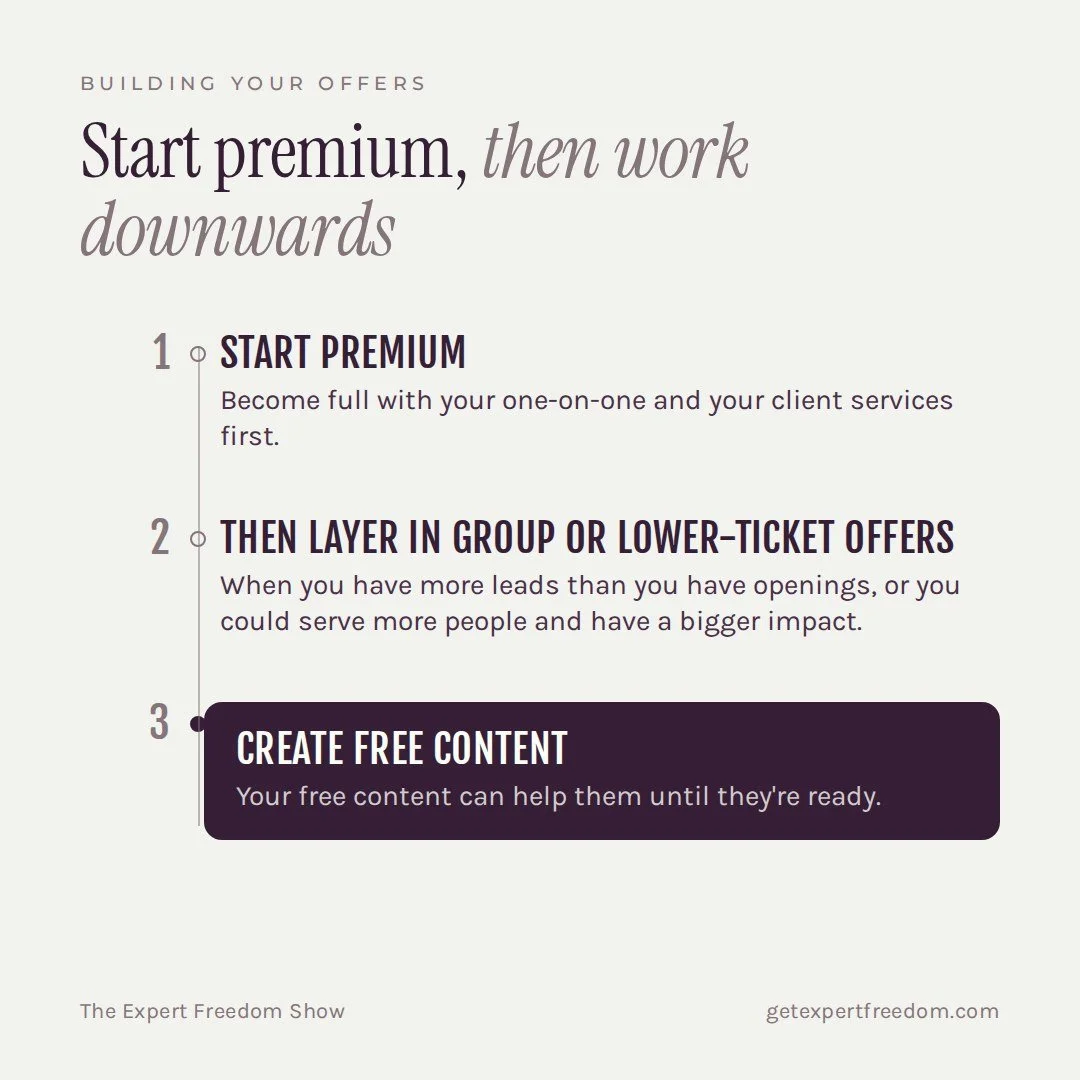
Start premium, then work downwards
Today Danica works mainly with therapists and mental health providers, and she knows the money stories in that field because she was told the same thing. Her ideal clients are practice owners who have broken through that story, who have multiple locations and need to move past founder-led marketing and operations.
Where she struggles is with practice owners who could use her services and aren't at that place financially. Should she create smaller offers? A group program? She keeps landing in the same place.
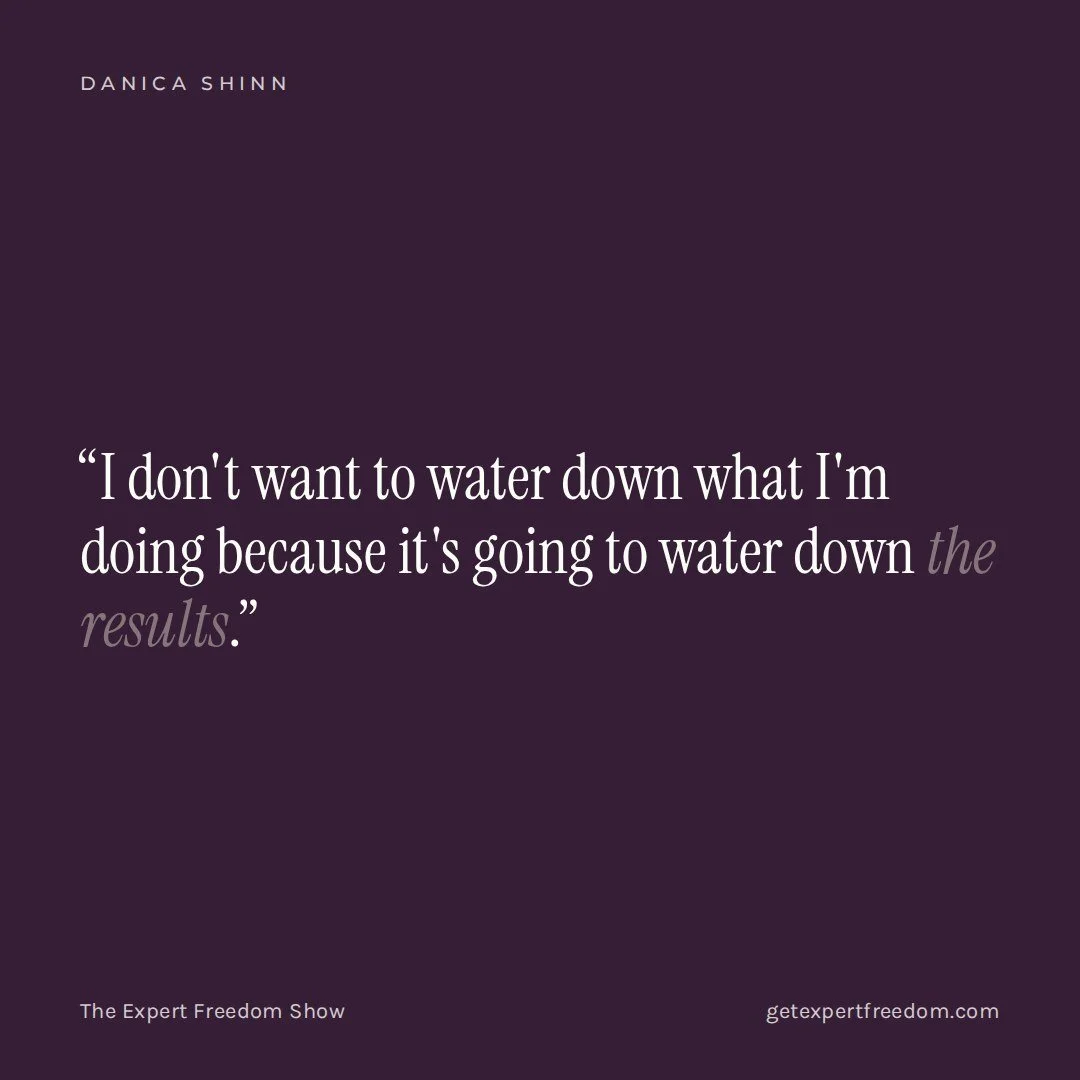
“I don’t want to water down what I’m doing because it’s going to water down the results”
What I've encouraged Danica to do, and what I encourage anyone just starting out to do, is start premium and then work downwards. Become full with your one-on-one client work first, and then start layering in group or lower-ticket offers.
Don't add them because you feel bad for the person sitting in front of you, because that will never work out well. Add them when your business is at a stage where it makes sense, when you have more leads than openings, or when you realize you could serve more people and have a bigger impact with a group program.
In the meantime, create free content. The people who aren't ready to work with you yet can consume it for free, and it can help them until they're ready. That doesn't mean watering yourself down.
Holding the line means you care
Holding that line is still hard for her, and she's honest about why.
“If I don’t hold that line, if I don’t hold that boundary, I’m not going to be able to live the life that my family deserves or that I deserve”
The boundary is what feels most uncomfortable for people like Danica and me in the beginning. I always want to highlight it when someone struggles with that, because it means you care. That's a good thing. I would so much rather work with someone who cares and help her put it into a structure she can actually thrive in.
Then comes stage two, which is impact. We have the smallest impact when we're overextending ourselves and exhausted. When you have freedom in your calendar, you can spend time on things like podcasts and extend your reach, and that's when you can have the biggest impact with your gifts.
Ready to stop watering down your offer to make it easier to buy? Talk to my team about building it at the level your expertise deserves.
Delivery is the cheat code
Even six months ago, Danica didn't think she needed an Instagram account or any real marketing for herself. She has excellent word of mouth, and she filled her practice without formally launching. Now she's stepping into the visibility phase.
When someone grows through word of mouth, what it says to me is the quality of their work. Everybody is so interested in talking about how to get clients, how to market themselves, and how to grow their following. I always say the cheat code in any business, and particularly in this one, is delivery. When you do a great job for somebody, they will tell their people.
It's also why I keep telling experts you can get clients without social media when you start with the people who already know your work. For Danica, it's gone even further. Other marketing companies have reached out to work with her, because they've seen her process and the results she gets for their clients.
Make the framework your own
This year Danica turned years of client work into a repeatable framework, and she recently named her method. She thought she would need to adopt someone else's framework, processes, and plans, study what I'm doing and just do that. Over the last year she discovered she already had a proven process that was working really well.
Naming it seemed trivial to her at first. Doing it gave her a level of legitimacy and confidence that helps her move through the money pushback in her own head on a sales call.
I create the curriculum inside Expert Freedom from my own many, many reps growing my business. The best students are inspired by it, and then they make it their own. They realize they can use a framework or repeatable assets again and again, which lets them deliver in a time-leveraged way and makes a client result more likely. If you don't put the tools into your own practice, your own lens, and your own perspective, they'll never feel like yours.
Danica says imposter syndrome still comes up as she moves into new work, along with that old question of who she is to think she can make money. Here's what I want you to know. That is just a normal part of the process. It doesn't mean stop. At every level of business growth it shows up again. It never goes away, you just get better at managing yourself through it. If you're asking whether you're good enough, I often see that as a good sign, because it means you care.
A new money mindset starts before you feel ready
Danica used to teach in social work departments at a local university. Toward the end of that time, she started telling her students that there is a path. You might have to get creative and think about different streams of income, but there is a path.
She's come a long way in a short time, with a lot going on in her life. So I asked her what she'd say to someone who is just starting out and juggling a lot. Her answer was something she says she's heard me say more than once.
“You know enough to start now. You already know enough... You don’t have to lock in exactly what things will look like in six months, a year, three months, just to get started”
The clarity comes with taking action, with actually delivering and actually talking with people, and with paying attention to both the data and your gut. If you grew up believing helpers don't get paid, your money mindset can change the same way Danica's did, one boundary and one client at a time. You can find Danica at confidencecultivated.com.
You already know enough to start. If you want help turning what you know into an offer you can charge for with confidence, book a call with my team and we'll map out your best next step.
Frequently Asked Questions
What is a money mindset?
Your money mindset is the set of beliefs about money you carry, often from childhood. Danica Shinn was taught at 16 that you can't make real money as a social worker, and she carried it for nearly three decades into how she priced her business. Shifting it means believing you can help people and have money.
Why do helpers undercharge for their expertise?
Many of us were told that caring about people and making money don't go together. In the stories we grew up with, the woman with money is usually the evil queen. So helpers water down their offers or say yes to people who can't afford them, even when it waters down the results.
Should I start with a premium offer or a cheaper one?
Start premium and work downwards. Become full with your one-on-one client work first, then layer in group or lower-ticket offers when you have more leads than openings. Don't add them because you feel bad for the person in front of you. Free content can help people until they're ready.
Does imposter syndrome ever go away?
In my experience, it never goes away. You just get better at managing yourself through it. It shows up again at every level of business growth. If you're asking whether you're good enough, I often see that as a good sign, because it means you care. It's a reason to reflect and process.
Do I know enough to start a business with my expertise?
You already know enough to start now. You don't have to lock in exactly what things will look like in six months or a year. The clarity comes from taking action, delivering, and talking with people. Many experts even get clients without social media through word of mouth.
About Laura Meyer
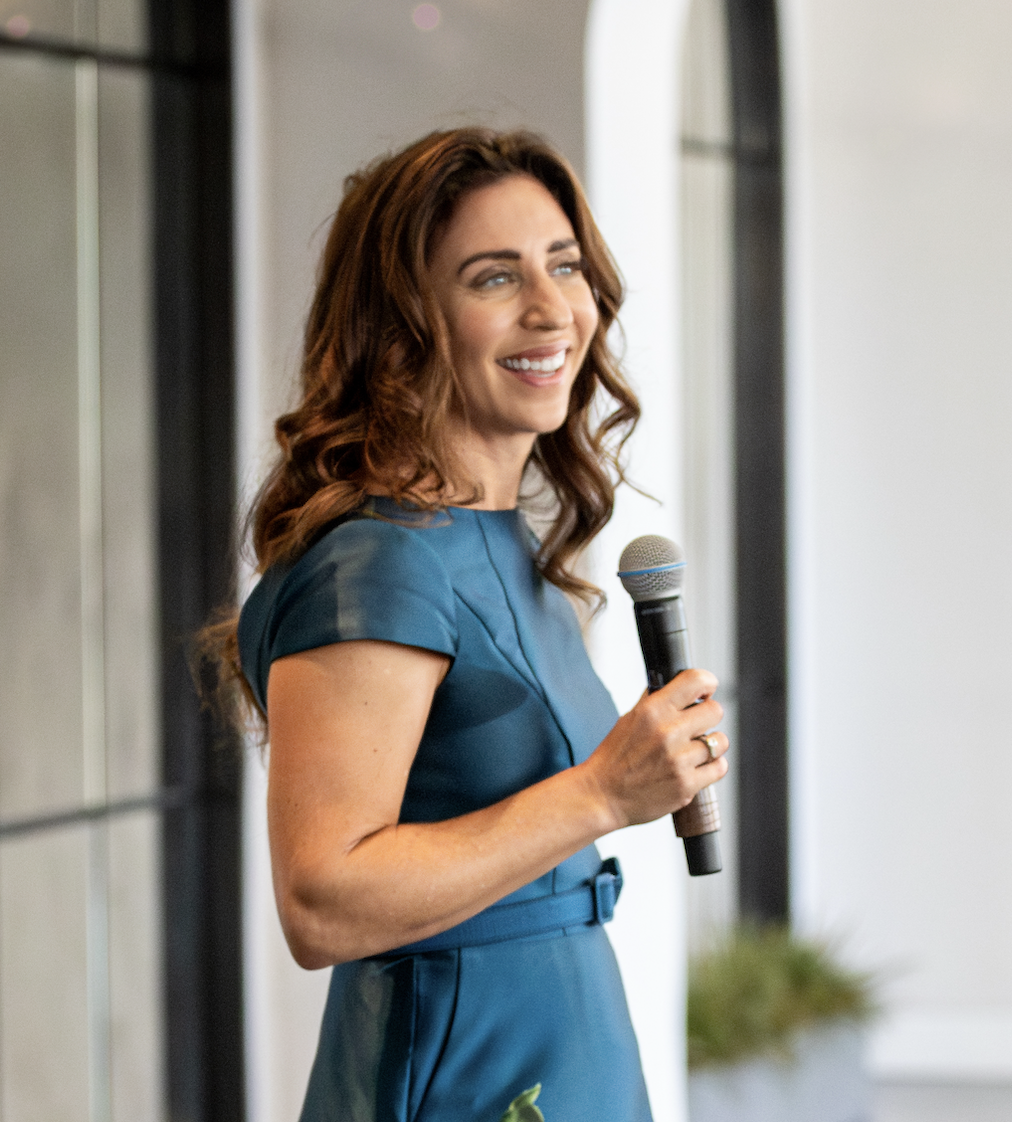
Laura Meyer is the founder of Expert Freedom and host of The Expert Freedom Show. Over more than 20 years as an entrepreneur, she built and franchised a 12-location company, then started over at 40 and rebuilt to a multi-seven-figure business on part-time hours. Today she advises businesses, sits on company boards, and helps experienced professionals turn their expertise into businesses that fit their lives. She’s a mom of three and a self-described tennis addict.