
We were at Magic Kingdom, and I was standing on Main Street while the light hit the castle in this gorgeous golden way. It was the kind of moment where you just stop and feel grateful.
My first thought wasn't "let me enjoy this." It was "I need to get a shot of us walking toward the castle for B-roll," because my YouTube editor wanted more B-roll from me.
That's when I caught myself. If you're looking into content repurposing because creating content already feels like a grind, start here. I was doing the exact thing I said I would never do, which is disrupt my own life for the sake of content. By the end of this post, you'll know what I changed and how to figure out which content format actually fits you.
If part of your grind is staring at a blank page and trying to turn what you know into a post, I built a free tool for exactly that. Try the Expert Post Generator. It turns what you already know into five ready-to-post pieces in under 60 seconds, written to sound like you.
How content creation started running my life
A couple of months ago, I switched to a podcast-first content format. Up to that point, I realized I had accidentally not been very honest with you about how I was creating content.
I tell my students to create aligned content, to make sure it doesn't take over their lives, and to quit the content grind instead of chasing audience growth. There was one place in my business where I was doing the exact opposite, and that was YouTube.
I told myself YouTube just takes time, and that's what everybody else told me too. Anyone I spoke with said I hadn't been doing it long enough and I just had to stay consistent. So I did the thing I'm actually really good at, the same thing I tell my students: let consistency be your superpower. Week after week, I soldiered on. And the more I did it, the more frustrated I got.
The reason I started was simple and a little embarrassing. It felt like everybody else was doing it. All the cool kids were on YouTube, and everyone said long-form video builds trust and is the best way to connect with your audience. But I personally hated it. I hated pointing at ridiculous things and making stupid faces at random numbers just to get attention on a thumbnail. I hated feeling like the hook had to land exactly right in the first 30 seconds, or nobody would watch the video I'd worked so hard on. It got so performative and perfectionistic that every time I sat down to record, I dreaded it.
Then something surprised me. While I was building the podcast module inside Expert Freedom, researching all our tools, templates and SOPs, some new third-party tools showed me that my old podcast had been in the top 2% of podcasts in the world. I had no idea. Podcasting had always felt easy, natural and conversational, an extension of the relationship building I'd been doing for 20 years across every business I've built. So I started asking myself why I was torturing myself with YouTube when I loved podcasting.
Treat the content grind as data
Seth Godin wrote a great book called The Dip, about the point where you have to decide whether to try harder at something or start over. I highly recommend it. Many of us just haven't been doing something long enough to get a result. I see it with our students all the time. They make an offer once, to someone who wasn't even their ideal client, and they're already ready to give up on it.
With YouTube, the dread was telling me something different. I was in the wrong lane, and trying harder or spending more on equipment was never going to fix that.
People usually feel overwhelmed by content for one of two reasons. The first is a misalignment with their own gifts and how they like to create, whether that's video, audio like a podcast, or writing. The second is trying to build across too many platforms at once: three platforms, five different tactics, and a growing pile of best practices pulled from ten different people, none of which were ever designed to work together. That kind of complexity collapses under its own weight. For me, the fix meant giving up an entire platform instead of trying to make several work.
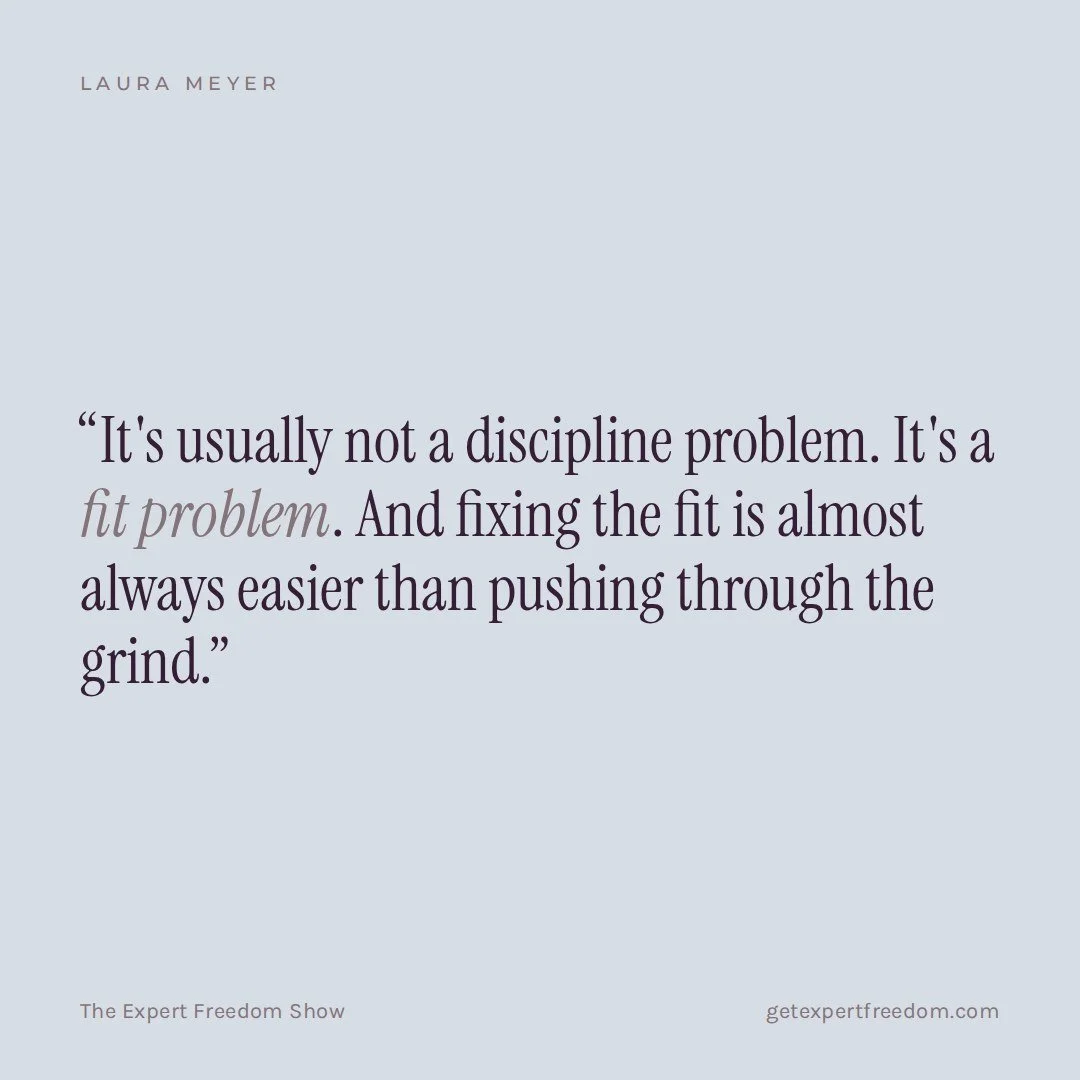
The format that feels like a grind is telling you that something is out of alignment. It's usually not a discipline problem. It's a fit problem. And fixing the fit is almost always easier than pushing through the grind.
This is exactly why I don't teach one single content strategy inside Expert Freedom. Your personality, your point of view and your actual gifts might not match mine, or match whoever is telling you there's only one right way to show up online.
Video first or writing first: find your lane
So if there isn't one right way to show up, how do you find the way that works for you? Figure out which of two lanes you're naturally built for.
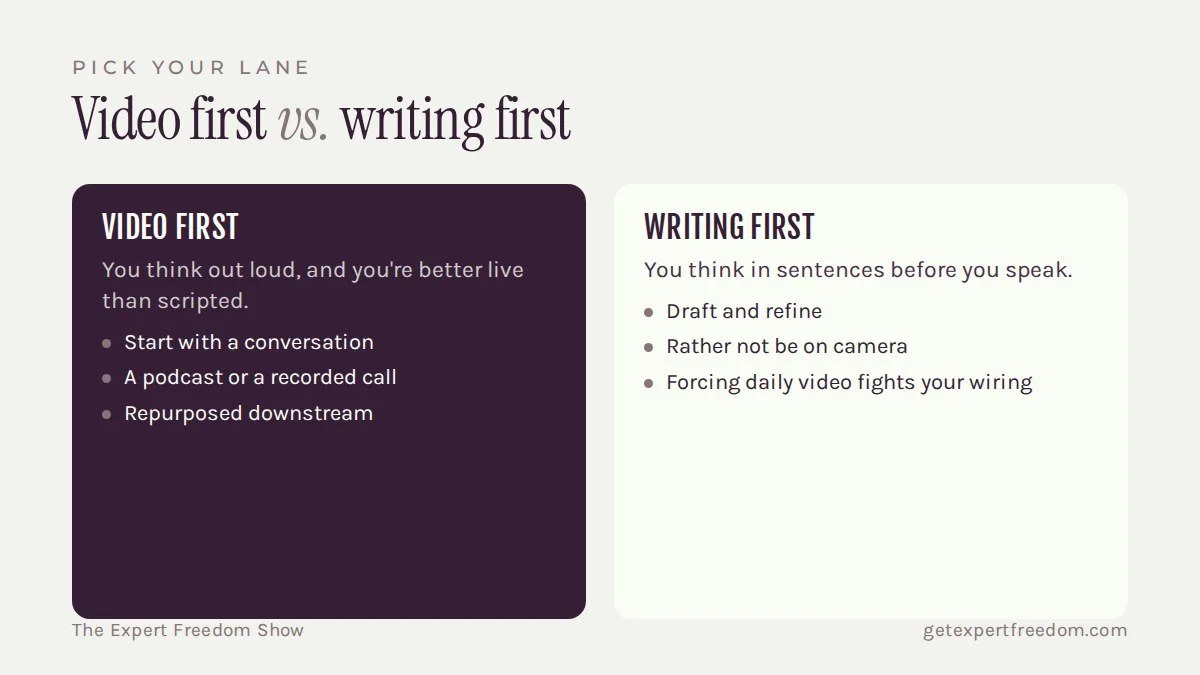
If you're video first, you think out loud and you're better live than scripted. Your content engine should start with a conversation, like a podcast or a recorded call, and get repurposed downstream.
If you're writing first, you think in sentences before you speak, and you'd rather draft and refine than be on camera. Forcing yourself onto video every day just fights your own wiring.
That was my YouTube problem. I was doing video first the hard way, when podcasting (conversational, relationship based and low production) was the version of video first that actually fit my personality.
Neither lane is more legitimate than the other. Someone will always tell you that you have to be on a certain platform, or that you have to do video on Instagram, and you'll find examples of success that do the exact opposite. That feeling of being in the grind often comes from choosing a format that isn't a good fit for who you are.
Once you know your lane, the next problem is usually getting the words out without it taking up your entire afternoon. That's why I built the Expert Post Generator. It's free, and it turns what you already know into posts written to sound like you.
Content repurposing that still sounds like you
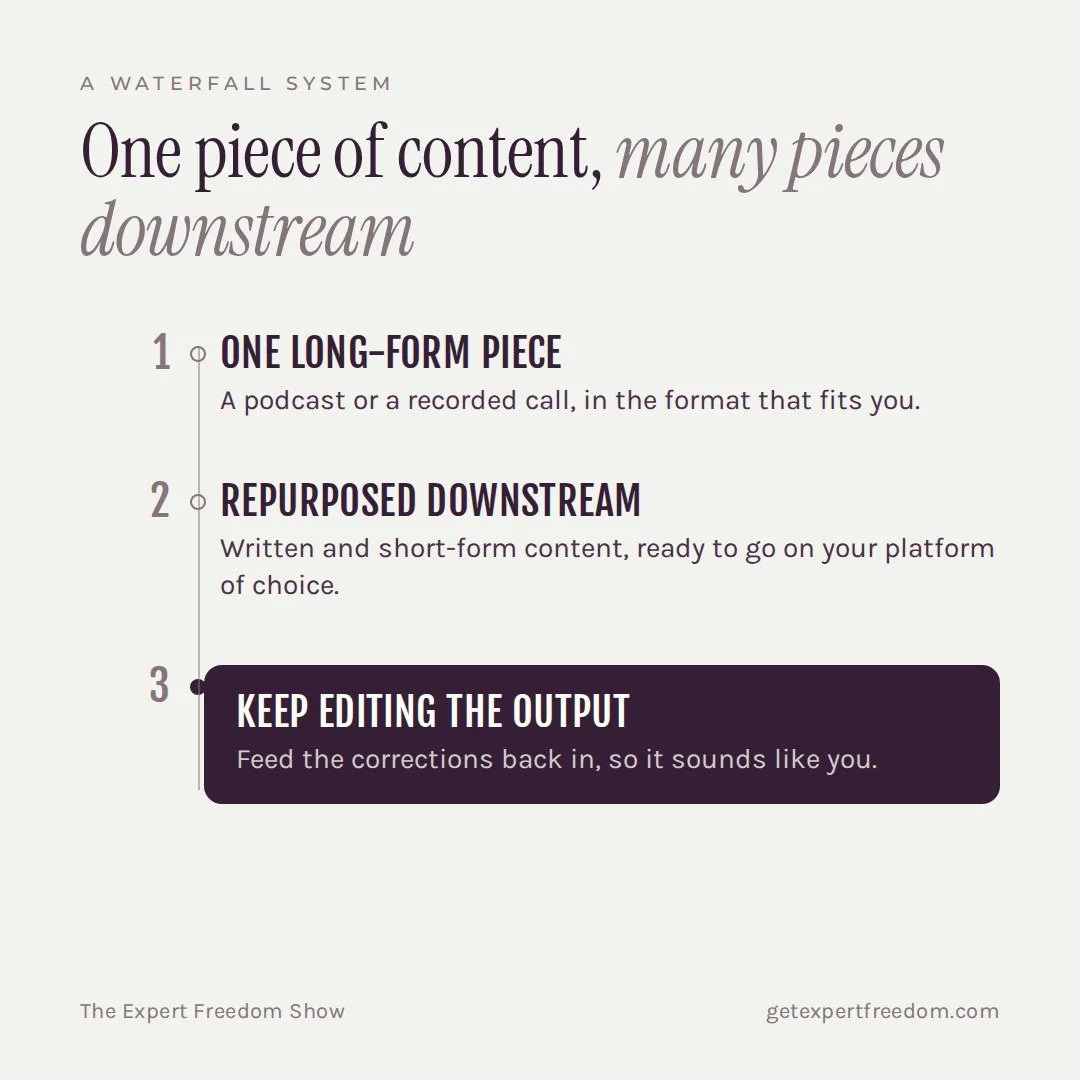
Once you've chosen your lane and your format, the next question is how one piece of content can become many pieces of short-form content without burning you out. I call this a waterfall system for your content: you take one long-form piece, and it turns into everything else downstream.
Everybody talks about repurposing, and almost nobody does it well. You've seen the result. It just looks like AI slop, with generic captions, hollow clips and the kind of grammar you only see when AI wrote it. I've gotten to the point where I can't even read it anymore.
Whatever your main format ends up being, you can often repurpose it into short-form content. But it needs to come out sounding exactly like you and formatted ready to go on your platform of choice, or you'll spend all day fixing it before it's ready to post.
Here's what we built for our own business. Every single Monday, an agent goes across all the data in our company that would make a good source for content. We have an idea bank, fed by our call recordings, coaching calls, sales calls and anything else that tells us what our ideal clients would love to hear from us. Another agent scans the internet for trending topics and trending hooks, so we can put our own spin on them for social media. It took a while to build, because I needed it to work really well and I needed to spend less than an hour a week pushing my content out to different platforms. Now that we've figured it out for ourselves, it's a system we build with our students directly inside Expert Freedom.
Training it once isn't enough. You keep editing the output and feeding the corrections back in, and that loop is what makes it sound like you instead of a robot wearing your name. Without it, you're recreating short-form content from scratch every time you post, which is the same grind again, just wearing a repurposing costume.
What my content week looks like now
I record my podcast twice a month. Every time I record, that content is repurposed into written and short-form content for different platforms.
My friend Lindsay is with me when I record. It feels fun and light, she asks me really good questions, and we laugh a little between episodes. I stole this idea from Brené Brown. I heard her on a podcast once, and she said she goes away with her friends when she writes a book. She goes into a room and types for a while, comes back out and tells them what she did. They laugh, they tell stories, they give feedback, and she goes back in and writes again. After a weekend, her book is done.
I'm a social person, so sitting in my office by myself, staring at a camera and trying to make it sound like me, just wasn't working. If other people energize you too, a podcast can be a really good fit. You can have somebody in the room with you when you record, or you can have guest episodes where you play off each other's ideas.
Content repurposing works when the format fits you
A lot of people don't want to create content at all, because all they've seen is that it's a grind. But there comes a point in your business, usually after you have your first handful of clients, when it's really important to commit to increasing your visibility. When you increase the visibility of your expert brand, beautiful things happen. You get invited to paid board seats, like I have. Clients come to you instead of you going to them. And the perception of your expertise goes up because of what you're putting out there.
Two things keep it from becoming a grind. The first is alignment: a format you enjoy that feels like an expression of who you are, whether that's conversation, video or writing. The second is systems: agents trained in your voice, your brand, your beliefs, your values, and what you're for and against, that can take your own Zoom conversations and the ideas you dumped into an idea bank on the fly and hand them back to you in a finished format once a week.
That's what makes it sustainable. I just can't spend more than an hour or two a week on content. I don't have the patience for it, and if it took up my entire week, I know I couldn't keep it up. You may be hearing that you have to post three, four or five times a day and fill your stories every 24 hours. You may be able to do that for a season. What I set up has to be something I can reasonably do for years to come.
So if content creation feels like a grind right now, treat it as data. It's telling you which lane you should and shouldn't be in. Just don't give up on content altogether. I see people do that as soon as they get busy, or as soon as they're full and don't need more clients, and it's a mistake. The game of content is very much worth playing.
There's more than one way to be visible, and the only one that's going to last is the one that fits you.
If you want the fastest way to turn what you already know into something you can post today without sounding like a robot wearing your name, grab the free Expert Post Generator.
And when you're ready for the full path, book a call with my team and I'll point you to the right next thing.
Frequently Asked Questions
What is content repurposing?
Content repurposing means taking one long-form piece, like a podcast or a recorded call, and turning it into the written and short-form content you post everywhere else. I call it a waterfall system. It only works when the output sounds exactly like you and comes out ready to go on your platform of choice.
Why does creating content feel like a grind?
Usually it's a fit problem. You might be forcing yourself into a format that doesn't match your gifts, or building across too many platforms at once with tactics that were never designed to work together. Treat the grind as data. It's telling you which lane you should and shouldn't be in.
How do I choose the right content format for me?
Figure out which lane you're naturally built for. If you're video first, you think out loud and you're better live than scripted, so start with a conversation like a podcast or a recorded call. If you're writing first, you think in sentences and would rather draft and refine than be on camera.
How do I repurpose content without it sounding like AI?
Train your system on your voice, your brand, your beliefs and your values, then keep editing the output and feeding the corrections back in. Training it once isn't enough. That loop is what makes it sound like you instead of a robot wearing your name, and it keeps my content to an hour or two a week.
Should I stop creating content once I have enough clients?
No. I see people stop putting themselves out there as soon as they get busy or have a full client load, and it's a mistake. After your first handful of clients, visibility for your expert brand brings clients to you and raises how people see your expertise. Invest in the right systems instead.
About Laura Meyer
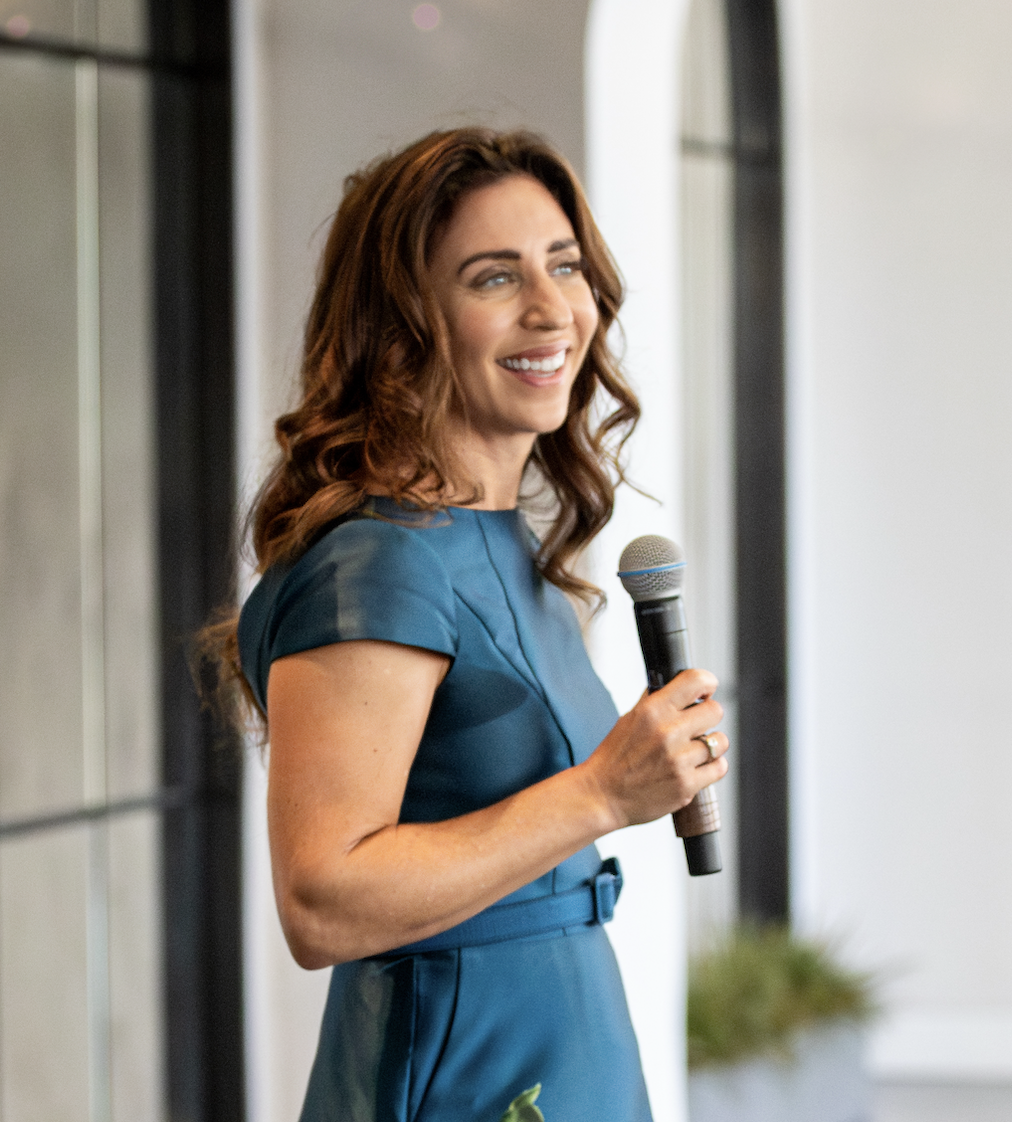
Laura Meyer is the founder of Expert Freedom and host of The Expert Freedom Show. Over more than 20 years as an entrepreneur, she built and franchised a 12-location company, then started over at 40 and rebuilt to a multi-seven-figure business on part-time hours. Today she advises businesses, sits on company boards, and helps experienced professionals turn their expertise into businesses that fit their lives. She’s a mom of three and a self-described tennis addict.