
Why does success sometimes make you feel more alone, not less? You would think that getting the business you've been dreaming about off the ground would make you feel closer to people. Over the last 25 years in business, I have struggled with loneliness probably more than any other emotion.
Entrepreneur loneliness is one of the most common challenges in building something of your own, and very few people talk about it honestly. One of our students recently posted this in our community:
“From the outside, things are going really well. I'm really grateful for the clients that I've been able to work with, and I'm excited about where the business is headed. But the entrepreneurial journey can also feel super lonely some days, and I find myself wishing that I could share all of this with other people who get it.”
Honestly, I couldn't have said it any better myself.
If your business is starting to work and the people around you don't quite get you anymore, I made something for this exact season. Get the free Future Self Journal. It helps you sort through what's changing, what you're outgrowing, and who you need to be around next.
Why entrepreneur loneliness shows up when things start working
When you start growing a business, you finally start getting everything you had hoped and dreamed of. And at the same time, you've never felt lonelier. It tends to show up right when things start working.
When I started out, I wanted everybody around me to understand what I was doing and what I was going through. So I surrounded myself with entrepreneurs, and for many years I didn't build other types of friendships, because I assumed anyone who wasn't an entrepreneur couldn't get it. That got messy in ways I didn't see coming. I got too close with my staff, for example, because I had no support system outside of my business.
Once you start doing well and people find out about it, the costs of success get stranger. People will misunderstand what you do once they see your follower count. Some people will be jealous of you, and you won't find out until much later, usually from somebody else or when something goes sideways. Somebody once said to my kids, "Oh, I saw your mom's social media following."
Everything in business has an upside and a downside. Accepting that relieves a lot of pressure. Letting go of the idea that you shouldn't feel lonely, or that it shouldn't be hard, will make all of this so much easier.
The people around you won't always get it
Recently somebody made a slightly derogatory comment about me on an email string my husband wasn't meant to be on. It was about a local networking event they were considering me for, and the comment was around the idea of me being overly ambitious and a little bit on the bold side.
My first reaction was, they don't get it. They don't understand what it takes to grow a business. You do need to be tenacious, you do need to put yourself out there, and you do need to be bold. You don't need to be aggressive, and you don't have to have hard edges. I still think you can be feminine and you can be you.
Building a business takes a skill set most people don't have, and some of them may resent you as you develop it. Their discomfort with the fact that they're not entrepreneurs often gets put onto you in an unfair way.
Change what you expect from other people
When my students tell me they're feeling lonely, one of the first things I ask about is the beliefs underneath that loneliness. Usually they sound like this: other people should understand it. They should support me. They should get it. They should have the same perspective or the same risk tolerance.
Other people are going to look at entrepreneurship through a totally different lens, and they may even have negative feelings about it. That isn't yours to own. As I've shifted what I expect of other people when it comes to my own journey, the less lonely I've actually felt.
Becoming an entrepreneur was our decision. We own it, and at any point we could have chosen the more conventional path. When you choose the path less chosen, fewer people are going to get it, and all of that is okay.
When I'm playing tennis or out and about chatting with people, I never expect them to understand that part of me. As I've lowered that expectation, I've developed other parts of who I am, as an athlete, as a mother, as a robotics coach. That gives me more things to talk about with people that we are likely to have in common. When someone asks what I do for work, I answer and move on pretty quickly.
In the beginning, a business can feel all-encompassing. It's like having a newborn, your 24/7 focus. That might not be what's healthy in the long run. The more you develop other aspects of who you are and shape your identity in a well-rounded way, the more common ground you'll find with the people you meet.
Notice when the loneliness flares up
It helps to notice when the feeling comes up the most. For me, I feel the most frustrated and lonely as an entrepreneur when my kids are calling me from another room or people are trying to reach me, and my business needs me at the same time.
I have three kids with very busy schedules, and they're often all looking for me at once. In the summer, no matter how many things I've lined up for them, they're inevitably around the house looking for me, for a ride, a playmate, or an activity. So I get up at 5 or 6 a.m. and finish my deep work before anybody else in my family starts looking for me.
You might be thinking, I could never wake up that early. That's fine. That's just what works for me. The payoff is that when I plan my work in advance, I get so much better at compartmentalizing the different priorities in my life. If you can avoid putting yourself in the moments when the loneliness flares up the most, you'll feel it less often.
If you're outgrowing the old version of your life faster than the people around you can keep up, start with the free Future Self Journal. It walks you through who you're becoming and who you need around you next.
Isolation is a best friend to imposter syndrome
Another type of loneliness shows up for our students who are used to working inside a really strict structure. There were walls and ceilings and a floor for everything they did every single day, and other people told them whether it was good or not. Then all of a sudden they have to do that for themselves.
That can feel incredibly isolating, and inside that isolation the same thoughts pop up. This should be easier. Why is this so hard? Where are the people to support me?
Isolation is also a best friend to imposter syndrome.
As you feel that loneliness, you start thinking, maybe I shouldn't be doing this. Maybe I'm not good enough. Those darkest thoughts usually happen when you're alone. They typically don't happen when you're in community with other people or working with a coach. They happen when you're by yourself and your brain can basically crash out on you.
I know it probably doesn't feel this way right now, but it does get easier. I don't have those feelings as much as I used to, and that's because I've kept challenging the beliefs that lead to them. The idea that this should be easy. That it's not supposed to be this hard. That I shouldn't have this obstacle.
What if it is supposed to be hard? What if this obstacle is something entrepreneurship was meant to teach you? When you lower your expectations so they're in line with the reality of the beginning stages, you can feel much more peaceful about the decision to go out on your own.
Entrepreneur loneliness gets quieter in the right room
There have been many times in the last 25 years that I would consider myself to be at rock bottom. There were times I closed a business. There were times I experienced failure. Talk to anybody you look up to and they'll probably have stories just like mine about what happens before the other side of the rebuilding.
The best advice I can give you, if you're there right now, is to surround yourself with the right people. Please don't disregard your family and friends just because they're not the right fit for this particular challenge. Just be intentional about who is going to be next to you as you rebuild. I now have a handful of entrepreneur friends, and I met most of them at conferences or inside programs like Expert Freedom.
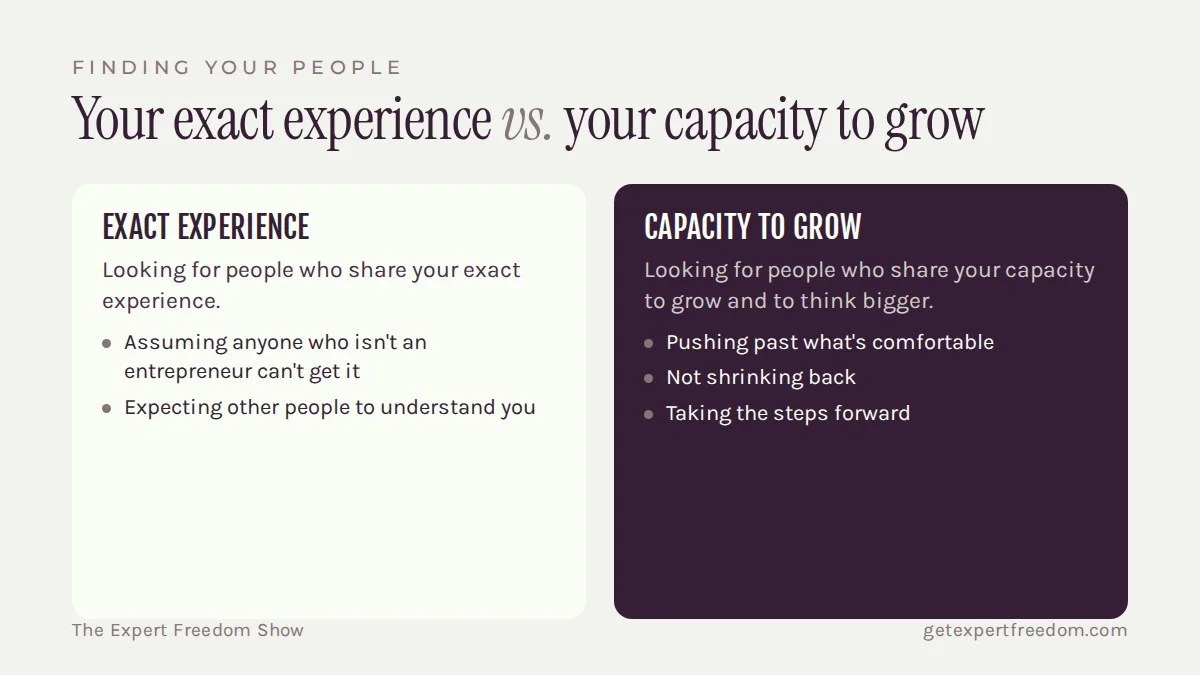
One of our coaches, Jennifer, is an extreme triathlete. Her closest friends aren't necessarily other founders. Some run businesses, some have big families, some have big careers. Every single one of them spends hours a week pushing past what's comfortable, and that's where the common ground is. Once she stopped looking for people who share her exact experience and started looking for people who share her capacity to grow and to think bigger, she stopped feeling like she needed anybody to get it.
So find a community with other entrepreneurs, and make sure it's aligned with your values, where you've been, and where you want to go. If everyone around you is a course creator or trying to grow a low-ticket program, it won't give you the connections you need to get to the next level. The experts inside Expert Freedom come to the table with experience. They've been in the trenches, and they know they want the second half of their career to look different.
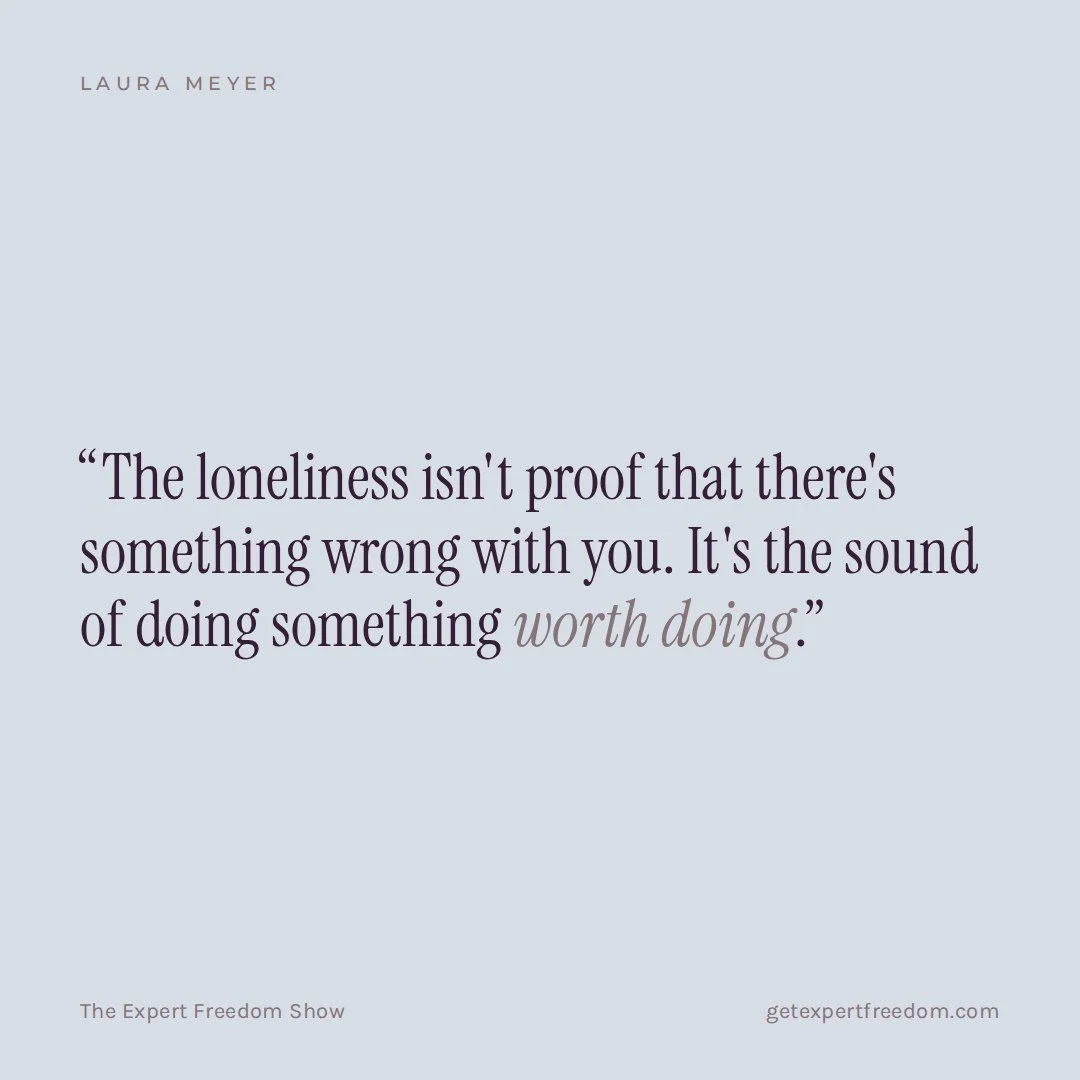
The loneliness isn't proof that there's something wrong with you, or even something wrong with the other people in your life. It's the sound of doing something worth doing, and it gets quieter.
This is the path less traveled, and it's also the path to an extraordinary life. I've walked it a few times now in different forms, once building my first business and once starting something completely over after I closed the last one. Both times, the lonely stretch came right before the parts I'm most proud of. The cost of building a life that's actually yours is that it starts to look different from everybody else's. I would call that a fair trade.
When the people around you stop getting you, that's your cue to decide who you're becoming. Download the Future Self Journal for free and map out what you're outgrowing and who belongs next to you as you grow.
And if you want to be in the room with experts building the same kind of business, talk to my team and we'll help you map out your next step.
Frequently Asked Questions
Why is entrepreneurship so lonely?
It often gets lonelier right when the business starts working. People misunderstand what you do, some get jealous, and the people around you look at entrepreneurship through a totally different lens. You chose the less conventional path, so fewer people are going to get it. Accepting that relieves a lot of pressure and makes it easier.
How do I deal with entrepreneur loneliness?
Start by changing what you expect from other people. They don't have to understand your business for you to have a full life with them. Then be intentional about the people next to you, and find a community of entrepreneurs who share your values and are building at the same time you are.
Is it normal to feel lonely when your business is doing well?
Yes, it's incredibly normal. As you grow, you may feel less and less relatable to the people around you. Over 25 years in business, I've struggled with loneliness probably more than any other emotion. It does get easier when you keep challenging the beliefs that lead to that feeling of isolation.
How does loneliness lead to imposter syndrome?
Isolation is a best friend to imposter syndrome. When you're alone, thoughts like maybe I'm not good enough show up, and your brain can basically crash out on you. Those darkest thoughts usually don't happen when you're in community with other people or working with a coach, which is why the right room matters.
Where do entrepreneurs find people who get it?
I met most of my entrepreneur friends at conferences or inside programs like Expert Freedom. Look for people who share your capacity to grow and to think bigger, whatever their line of work. And make sure the community fits your values, where you've been, and where you want to go, or it won't help.
About Laura Meyer
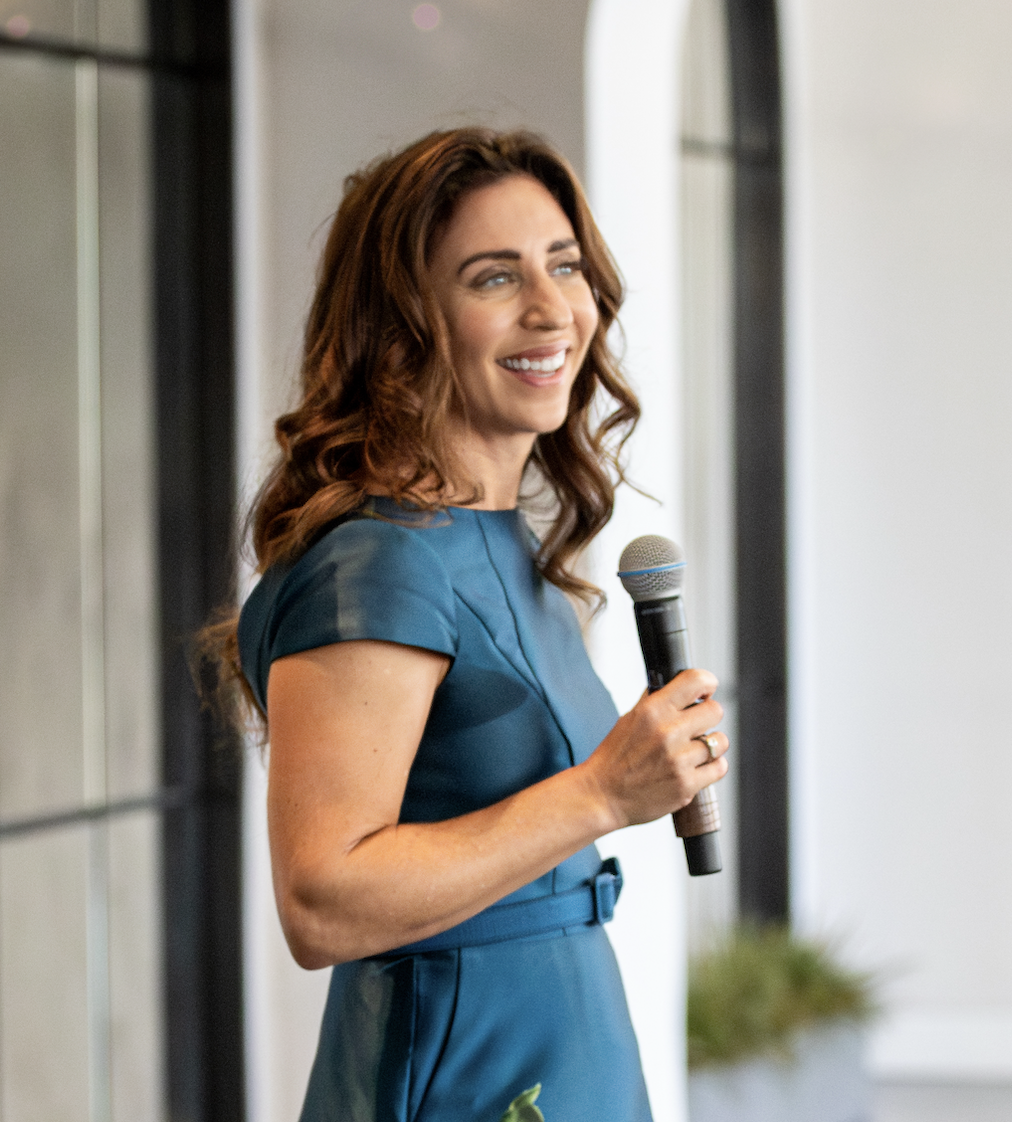
Laura Meyer is the founder of Expert Freedom and host of The Expert Freedom Show. Over more than 20 years as an entrepreneur, she built and franchised a 12-location company, then started over at 40 and rebuilt to a multi-seven-figure business on part-time hours. Today she advises businesses, sits on company boards, and helps experienced professionals turn their expertise into businesses that fit their lives. She’s a mom of three and a self-described tennis addict.