
Everybody talks about the fear of walking away from what you've been doing for so long. Almost nobody talks about what comes after.
That part usually shows up three or six months later. The adrenaline rush of telling people has faded, and the ones who were excited for you have gone back to their own lives. You have the freedom you asked for, and no idea where to start building something new. I know, because I've been there.
If you're in the middle of a midlife career change in your 40s or 50s, here's the good news first: the market is hungry for you.
Not sure which slice of your background is the most valuable part? I built a free tool for that. The Niche Finder is a short series of questions that points you to the lane your years of experience have already built for you.
A midlife career change doesn't mean starting over
When people make a mid-career pivot, a lot of them feel like they have to start completely from scratch. You don't. You can start with everything you've been doing up until now.
Premium buyers in particular are looking for that experience. They don't want somebody who speaks in hypotheticals, and someone in their 20s typically doesn't have enough experience yet.
They want somebody who can come in having had all of that experience and all of those lessons learned that they can benefit from. They are looking for your wisdom.
That's something a 25-year-old with a laptop and a ring light simply can't provide, and it's exactly what you should be leaning into in this season of your life.
You're right on schedule
I talked with a woman a few weeks ago who was joining our program. She felt like she had already missed her window, like she was late to the party and the party was winding down. Maybe you've felt that too. I told her what I'll tell you.
According to Forbes, an estimated 79 million Americans are working independently right now, and a good number of them are making six figures doing it. Many of them are mid-career solopreneurs, which was exactly her position.
There are plenty of reasons people hit this transition in their 40s and 50s. Your kids are getting older and you don't want to miss the rest of their childhood. Your body is changing, and working 50, 60, 70, or 80 hours a week isn't sustainable anymore. Or you're a caregiver for your parents, and the way you used to work conflicts with who you want to be in the second season of your life.
Here's the really good news about where that puts you. The years of deep networks and pattern recognition you bring as a mid-career expert are something somebody in their 20s hasn't had the time to earn yet.
The identity shift is the hardest part
In my experience, the identity shift is the hardest part of this, because what you're going through is more emotional than logical.
Marc Freedman writes about this in his Encore Career concept. The driving question shifts in midlife from "Can I prove myself? Can I earn that promotion?" to "Who do I actually want to become in this next stage, and what do I need to leave behind?" That's a completely different operating system, and the old one was likely installed back when you were running at 110% in your 20s or 30s.
Here's the trap. Your muscle memory takes over, and when you're creating a new business, you accidentally rebuild the old one without ever meaning to. Now you're both the boss and the employee.
If you feel restless right now, or everyone around you says you have it all and you can't figure out why you feel unsatisfied, there's research on this. The economist David Blanchflower mapped a U-shaped happiness curve, where life satisfaction on average bottoms out in your 40s and 50s. When you bottom out, you're at the beginning of a permanent upward swing. That restless feeling is a signal that you're about to explore what's possible.
I went through my own version of this at 40, and I wrote about how I rebuilt in here.
Why the blue ocean is where your experience pays
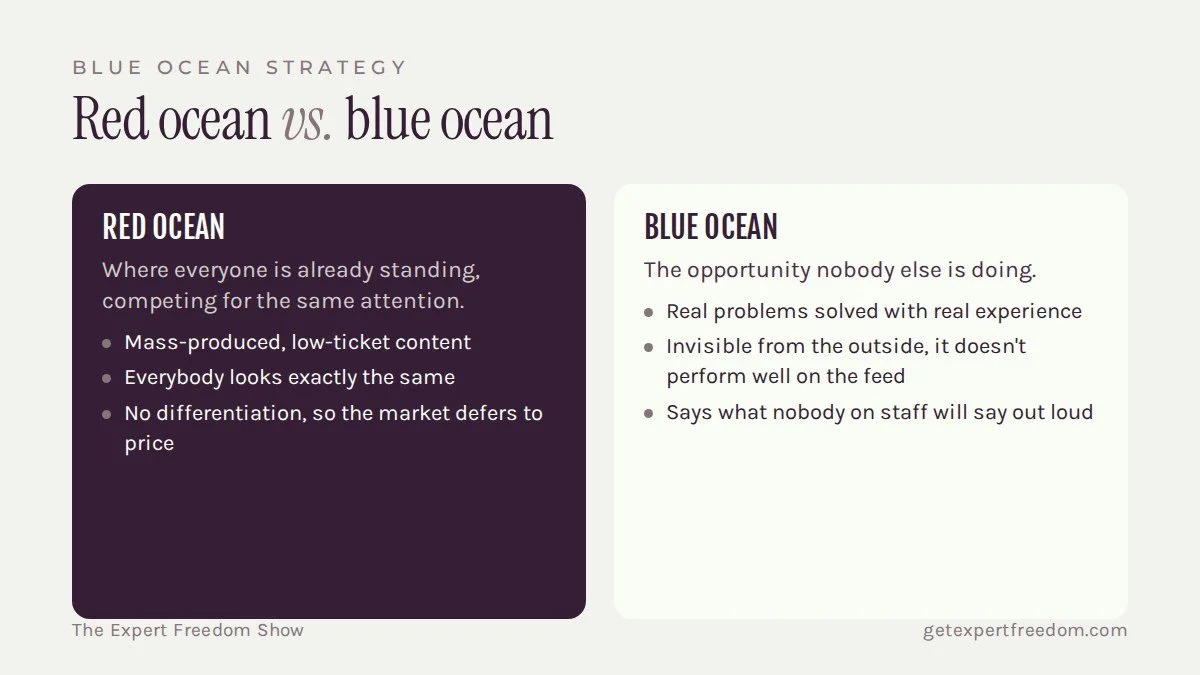
Everything you see online will tell you to do the opposite of what I'm about to say. If you scroll your feed, it looks like the whole game is played by people in their 20s and 30s, with the lifestyle content, the home decor, and the aesthetic of building a personal brand. It's tempting to think that's where the opportunity is, because that's where the volume is. It's also where the saturation is.
The real opportunity is invisible from the outside, because it doesn't perform well on the feed. It means solving real problems with real experience. The person who can do that often doesn't even need the job. She's someone with 15 or 20 years of pattern recognition who can walk in and say the thing nobody currently on staff is comfortable enough to say out loud.
Years ago, coming out of business school, I read Blue Ocean Strategy, and I still recommend it. The blue ocean opportunity is usually the one that no one else is doing. Producing more mass-produced content at a low ticket price and positioning it as "passive income" is the red ocean, and it is absolutely not passive. It takes extremely hard work to get those businesses running. The more time you spend competing in red oceans, the more you spin in circles, because in the absence of differentiation, the market will always defer to price.
If you're still working out what you're going to sell, the first fix is the starting point. The free Niche Finder shows you what your years of experience can convert into as an offer.
Stop saying yes to everything
When you first start working with clients directly, you're conditioned to say yes to everything, because that's what got you rewarded in the first part of your career. It's also a big reason building from scratch feels so hard.
I worked recently with a student who had an extensive operations background. She landed in a niche working with interior designers, which is a fun, creative market. But she was reinventing the wheel with every single new client. Once she got to five or six clients, she was completely maxed out on hours, and she couldn't start a one-to-many offer, which is what I recommend people in her shoes do. She had young kids at home and an aspiring tennis hobby (which I may or may not have had something to do with), and she wanted to build differently.
So she started developing what I call repeatable assets: systems, tools, templates, and skills she could use again and again with every client. She started feeling so much lighter in her business.
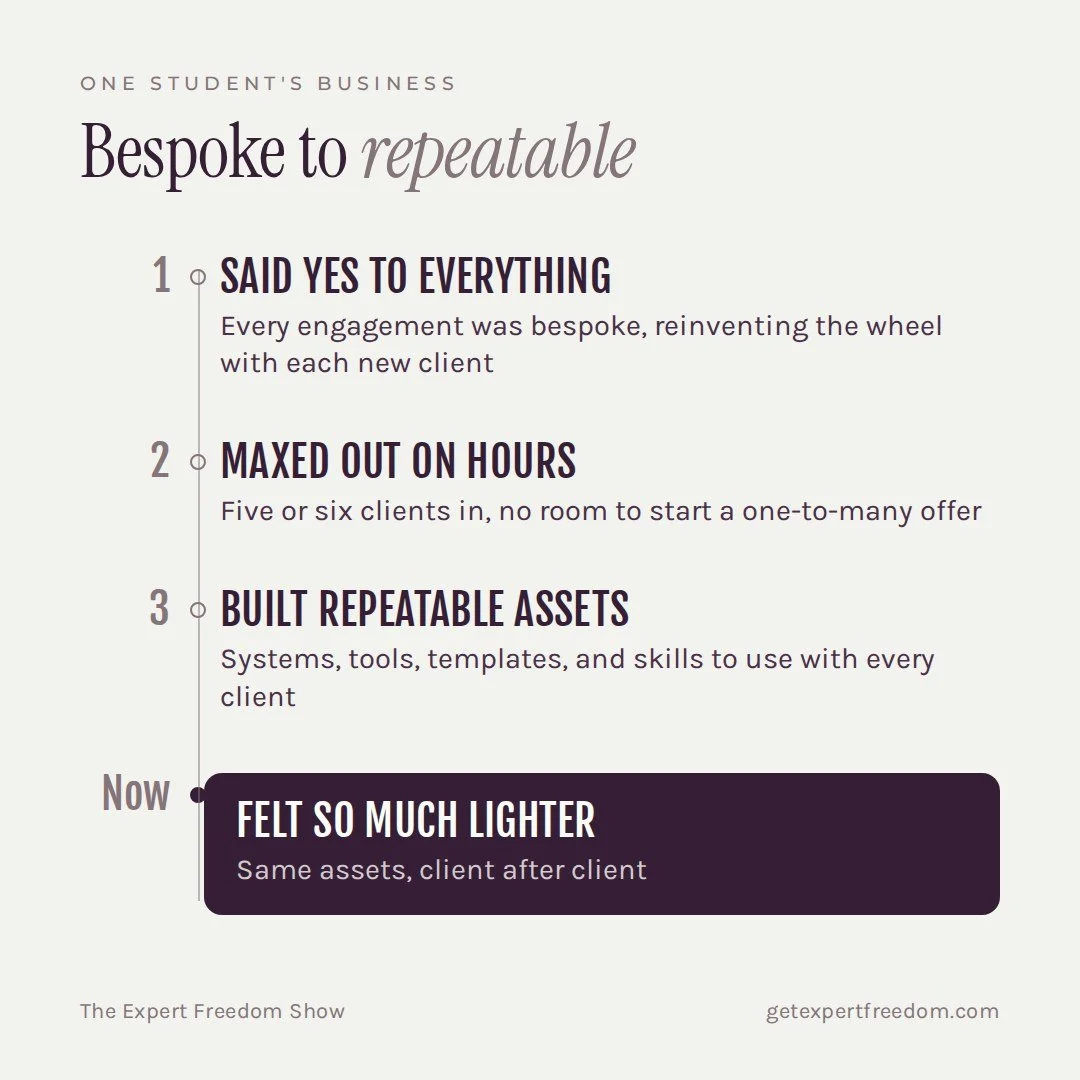
A lot of people think passive income means building a course and posting five times a day to grow a huge audience. What's quite passive and very leveraged is using the same assets from client to client. Eventually you can use them as part of your group programming, which is what I did.
And when you build this way, the number of clients you think you need to hit your income goal is dramatically smaller than what you've been told. The business you've been looking for is way closer than it feels right now.
Your midlife career change starts with one sentence
If you take one thing from this, let it be this: your years of experience do not have an expiration date.
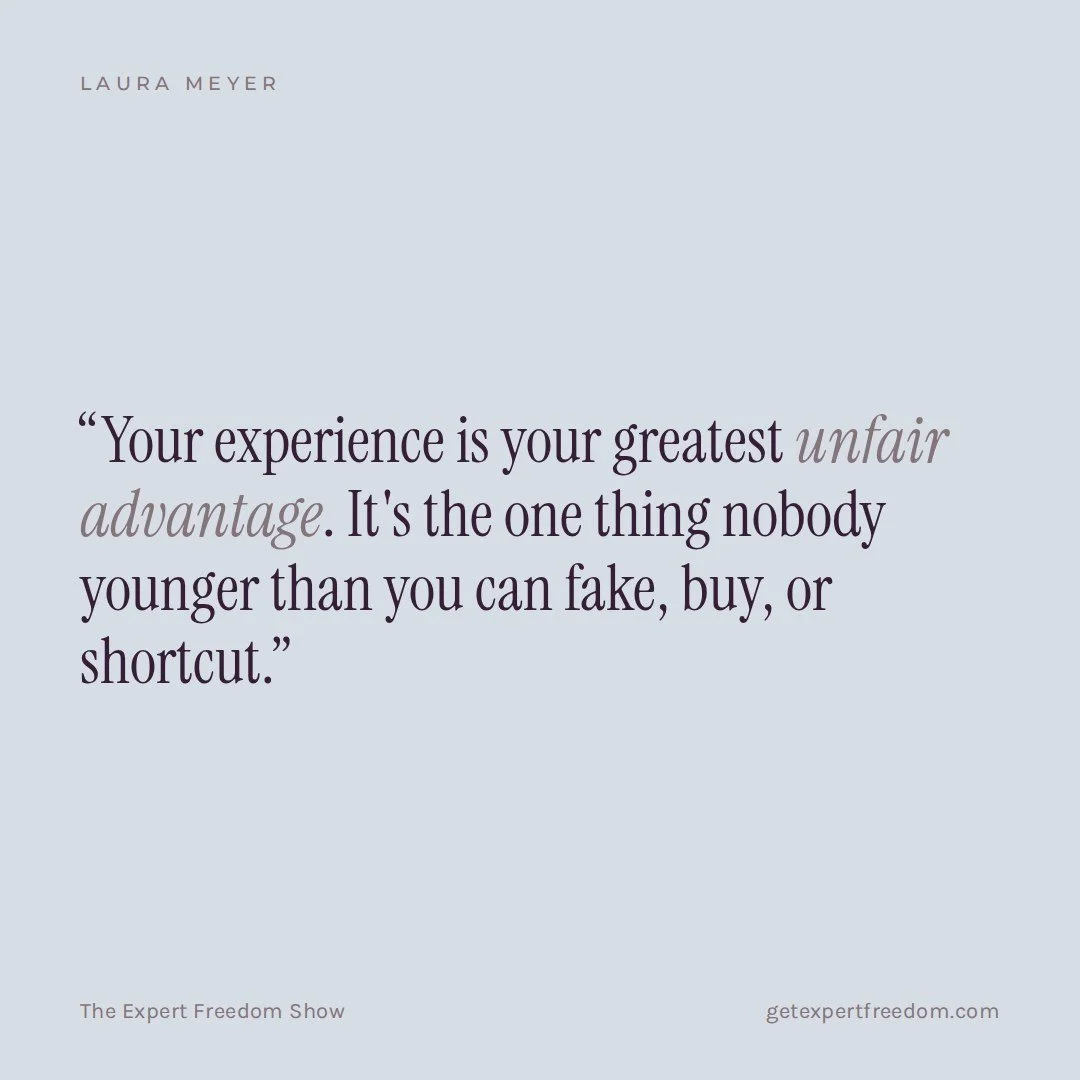
Leaving corporate, or whatever you were doing before, marks the point where your new identity and your new life start, and the market is asking for exactly what only you can bring: the perspective of someone who has been on the inside for as long as you have.
You do not need any type of huge audience. You do need a single sentence that explains what you do and the problem you solve, and a short list of people who already know, like, and trust you enough to hear it. The good news is that you're right on time.
If this landed, the Niche Finder is the fastest way to find your exact starting sentence. It's a short series of questions, and it's free.
Frequently Asked Questions
Is it too late to make a midlife career change?
No, you're right on schedule. Research shows life satisfaction tends to bottom out in your 40s and 50s, then begins a permanent upward swing, so that restless feeling is a signal. I went through my own version of starting over at 40, and the market is hungry for the experience you've built.
Do I have to start over from scratch to change careers?
You don't. When people make a mid-career pivot, many feel they have to start completely from scratch, but you can start with everything you've been doing up until now. Premium buyers are looking for that experience: the lessons learned and pattern recognition someone in their 20s hasn't had time to earn yet.
Why is the identity shift the hardest part of a career change?
Because it's more emotional than logical. The question shifts from "Can I prove myself?" to "Who do I actually want to become in this next stage?" Without noticing, your muscle memory takes over and you rebuild your old job inside your new business, so you end up being both the boss and the employee.
What is a blue ocean opportunity for an experienced professional?
A blue ocean is the opportunity no one else is pursuing. For an experienced professional, it means solving real problems with real experience, away from the crowded world of mass-produced, low-ticket content. In a red ocean, the market always defers to price. Your years of pattern recognition are what set you apart.
How do I build a business without working all the time?
Stop saying yes to everything and build repeatable assets: systems, tools, templates, and skills you can use with every client. One student with an operations background was maxed out at five or six clients until she did this. Repeatable assets make your business feel lighter and shrink the number of clients you need.
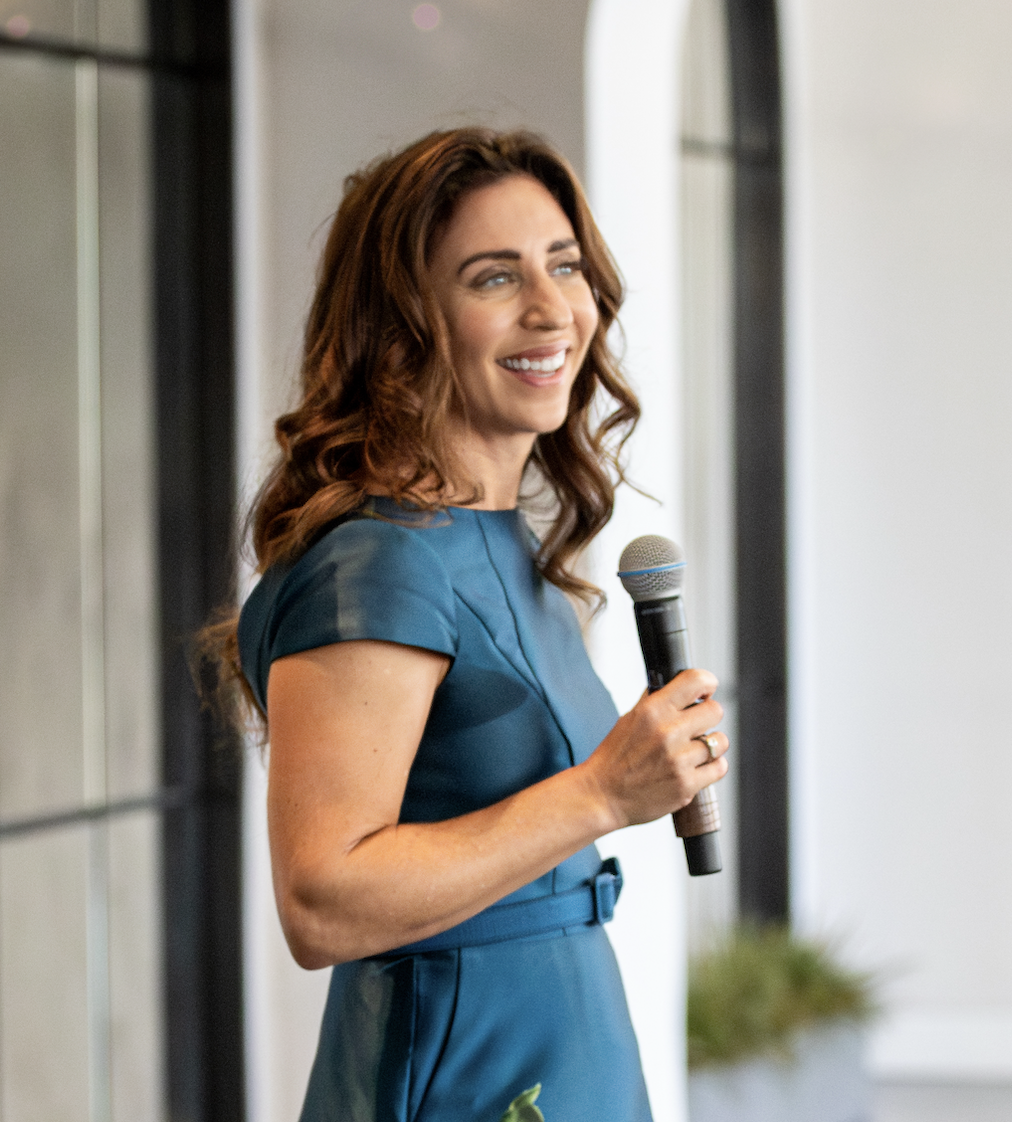
About Laura Meyer
Laura Meyer is the founder of Expert Freedom and host of The Expert Freedom Show. Over more than 20 years as an entrepreneur, she built and franchised a 12-location company, then started over at 40 and rebuilt to a multi-seven-figure business on part-time hours. Today she advises businesses, sits on company boards, and helps experienced professionals turn their expertise into businesses that fit their lives. She’s a mom of three and a self-described tennis addict.