
Dr. Rinki Varindani Desai came all the way from Boston to Pennsylvania for Expert Freedom Live, our in-person event, and the day after, she sat down with me for the podcast. I wanted you to hear her story, because it's one of the clearest pictures I know of a portfolio career built on years of experience.
Rinki spent 15 years as a speech-language pathologist, healthcare leader, and educator. Then she became a mom, and she knew her life needed to look different. Today she helps health tech founders and teams move from innovation to adoption. She co-founded an online education platform for speech-language pathologists that she helped grow to seven figures, and she still teaches and contributes to research at Mass General Brigham in Boston.
She didn't throw any of that away to get here. She found a new vessel for it.
Want help turning your own experience into a business that fits your life? Book a call with my team and we'll look at what you already have and where to start.
Change the vessel and keep the expertise
When I asked Rinki what she was looking for when she left her healthcare career in 2023, she corrected me. She never left healthcare behind. It's the reason she came from India to the United States in the first place.
“I just knew my life needed to look different, and the expression of my expertise or the medium or the vessel had to change because I became a mom and I had to optimize my life for motherhood”
Her husband is a physician too. "We couldn't have both parents lost to medicine," she told me. She wanted to be part of her son's early years, and she still wanted a meaningful career where she could help patients and families without one-on-one direct care.
I love the word vessel here. Rinki kept her expertise and changed the container it comes in.
She set up her LLC on LegalZoom one night while she was feeding her son. He fell asleep, and she hit click. She knew something was going to come out of it, even before she had a roadmap.
Your experience is the asset
Her first instinct is one I hear all the time. She thought she had to replace her full-time clinical job with another full-time job, so she started looking at non-clinical roles in healthcare, product management, and UX.
Her friends in tech stopped her. Why would a speech pathologist walk away from years of lived experience on the front lines of healthcare to try to become a product manager?
They were right. Rinki had been on the clinical side while companies tried to sell products for her patients. She could see there was plenty of innovation in health tech and a big gap in adoption, because companies often don't understand the clinical needs, the realities of clinical practice, or how a product fits into a workflow. She had partnered with industry, created an app, and helped people bring products to market as a volunteer. She had never thought of any of it as skills.
“That was my unfair advantage as a clinician”
There was also a business she wasn't counting. Rinki co-founded STEP, an online education platform for speech-language pathologists, and grew it to seven figures. Even so, she didn't think of it as her stable source of income.
A mentor from Csweetener, a free C-suite mentorship program for women, pointed out what she'd missed: STEP was her cash flow, so she could rely on that and then figure out what she wanted to do. Around the same time, she found my videos on YouTube and realized she could work 10 or 15 hours a week, still show up as the expert she is, and still have a meaningful family life.
Her first clients came from the network she already had
In her first six months, Rinki reached out to her network, a lot of it during her son's nap time. She didn't expect much. About 20 people responded right away and had conversations with her, and over half of those turned into projects in those first six months.
She says she followed what I teach to the tee: get your first beta clients, get your reps in, and use the Collaborative Close. And she made every conversation about the person in front of her. She asked how she could take her expertise and translate it into a business and tech context that made sense for them.
I love how she approaches her clients from that place of wanting to serve versus wanting to take.
It also shapes who she works with. Some relationships didn't work out, and she learned quickly that founders who were in it for themselves, or chasing a trend, weren't a fit for her. She skips projects that don't feel ethical or aligned. The work where she can see a tangible impact on patients, clinicians, and caregivers is where she finds fulfillment.
If you want a plan for reaching out to your own network the way Rinki did, book a call with my team. We'll help you see which conversations to start with.
A bad-fit first client and the clarity that followed
Here's the part I appreciate most about her honesty.
"The first [client] was actually such a bad fit because I was just desperate," says Rinki.
She presented a laundry list of everything she could do. The company wanted clinicians for sales and access to her network, and they didn't value what she brought to the table.
So she failed forward. She went deep on our coursework instead of jumping to the next client, and she nailed down her niche, her offer, the people she wanted to help, and the problems she wanted to solve. Each engagement gave her more confidence and more clarity.
"My conversations were more authentic because I knew what I could deliver and what my boundaries were," says Rinki.
She hit her first $10K month, then kept it consistent, and when we recorded, she had just had her first $15K month. She was quick to say the number wasn't what mattered most.
“It’s not so much about the number. It was just about knowing that I’m at the point now where I can choose”
Build around the season you're in
Rinki got into her doctorate program the same year she got pregnant. Her family flew in from India to help. She was handling a baby, a doctorate, and a brand-new business, which meant a lot of time management and a lot of sleepless nights.
She also knew she didn't want to miss a thing in her son's first three years. She doesn't buy into the hustle culture of posting every day. She does post on LinkedIn, and it has to feel authentic to her.
I relate to this. I have three kids, and when they're home, everything gets shut off and I'm mom. For me, it's about prioritizing the relationship, not just the time.
Rinki wanted to launch a podcast. When she posted about it in our community, I challenged her a little, because I know how protective she is of her time, and I wanted to make sure it was a direct line to where she wanted to go. She decided it wasn't. She'll use her voice at live events, roundtables, and thought leadership instead.
"But it doesn't have to look like what everybody else is doing," says Rinki.
That's the big thing I always encourage our students to remember.
Rinki also worries about business development, that she has to constantly keep at it. It gets easier. Once you start putting in the systems for people to be pulled towards you, lead generation gets a lot easier and you're not pushing as much. You're attracting.
A portfolio career means you don't have to pick one identity
Recently, Rinki was invited to give a keynote to health tech founders. Her talk was built on a framework she developed from LEAP, my delivery method, for assessing whether a product is ready for the market and taking it from innovation to adoption.
She has given lots of talks, always as the clinical expert in the room. She specialized in swallowing disorders and had seen thousands of patients, so she had the evidence behind everything she said. The startup world has far more unknowns.
"I did not feel like I belonged in that room," says Rinki.
She showed up anyway, as the expert, focused on providing value. If even one person leaves and builds a better solution for patients, she's given back.
What's next for her is a portfolio career, and she wants more women to pursue one.
"You don't have to have one identity. You don't have to do one thing," says Rinki.
She can be mom in one room, an entrepreneur in another, and an educator and advisor in another. So many of our students, and so many of you reading this, are evolving your identity as your business grows. Being an entrepreneur is its own identity. That's one of the fun parts of growth: becoming, evolving, and turning into upgraded versions of ourselves over time.
If you've spent 15 or 20 years building your expertise, your experience is the asset. The work is finding the vessel that fits the season you're in. You can find Rinki on LinkedIn.
And when you're ready to build your own portfolio career, book a call with my team and we'll map out your best next step.
Frequently Asked Questions
What is a portfolio career?
A portfolio career means you don't have to have one identity or do one thing. My guest, Dr. Rinki Varindani Desai, is a clinician, educator, researcher, entrepreneur, and mom, and she brings her expertise into each of those rooms. Each role is a different vessel for the same years of experience.
Do I have to start over to change careers after years in my field?
No. When Rinki stepped away from hands-on healthcare work, she first looked at full-time jobs in product management and UX. Friends in tech asked why she would throw away her lived experience on the front lines of healthcare. That experience became her unfair advantage, and you can start a business with your expertise the same way.
How do I find my first clients after leaving my job?
Start with your network. In her first six months, Rinki reached out to people she already knew, mostly during her son's nap time. About 20 people responded and had conversations with her, and over half turned into projects. She focused on beta clients, getting her reps in, and making every conversation about them.
What if my first client is a bad fit?
Treat it as failing forward. Rinki's first client was a bad fit because she felt desperate and offered a laundry list of everything she could do. She went deep on her offer, her niche, and the problems she wanted to solve. Each engagement after that gave her more confidence and more clarity.
Can I build a business around being a mom?
Yes. You get to choose the season, and you get to decide what you're up for in any season of your life. Rinki built her business while protecting her son's first three years, and she said no to a podcast that didn't line up with where she wanted to go.
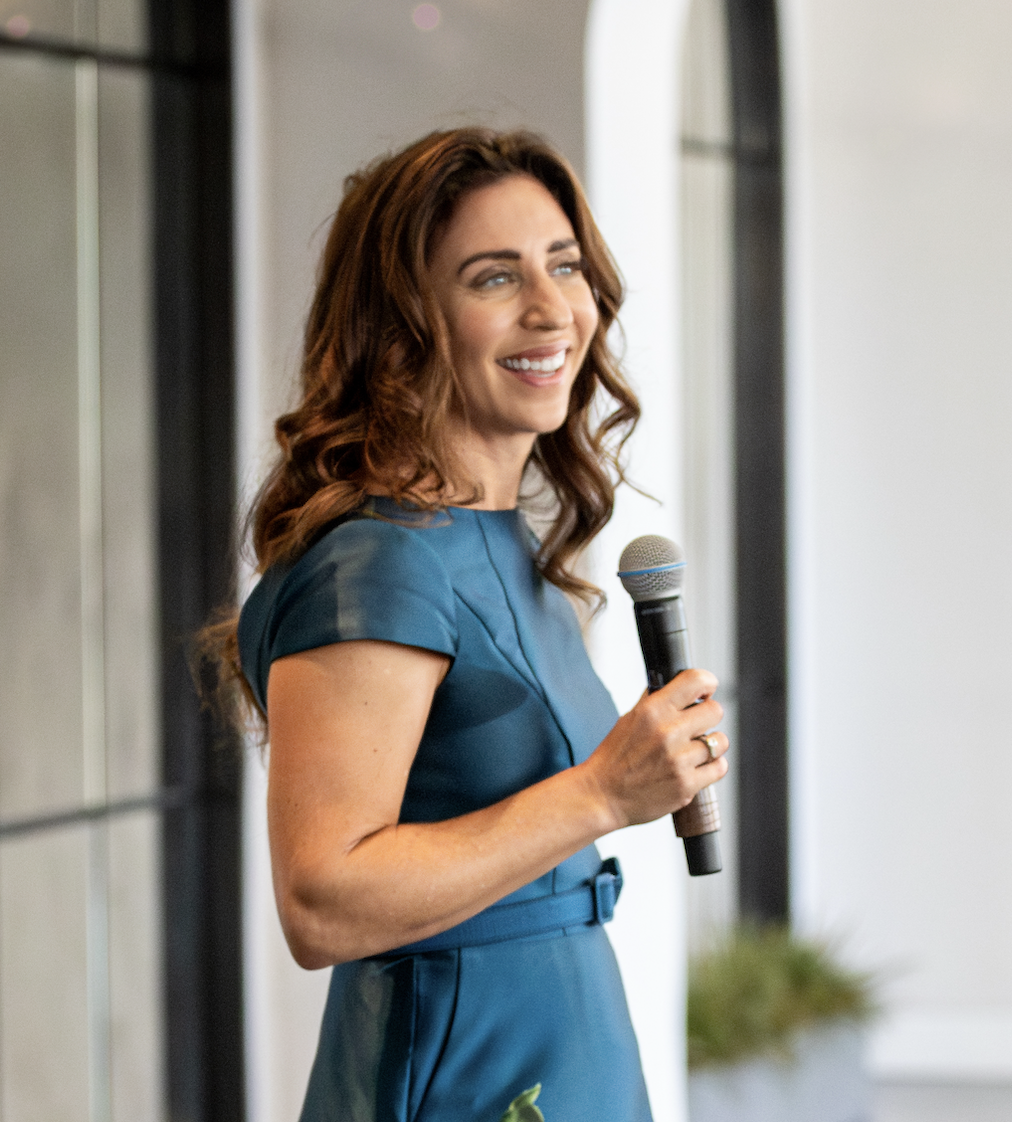
About Laura Meyer
Laura Meyer is the founder of Expert Freedom and host of The Expert Freedom Show. Over more than 20 years as an entrepreneur, she built and franchised a 12-location company, then started over at 40 and rebuilt to a multi-seven-figure business on part-time hours. Today she advises businesses, sits on company boards, and helps experienced professionals turn their expertise into businesses that fit their lives. She’s a mom of three and a self-described tennis addict.